


Modern Architecture 2026: A Breakthrough in Form and Smart Living Spaces
In an era of creativity, modern architectural style is no longer just about building a house—it is the art of arranging forms to create an ideal living ecosystem. With sharp lines, intelligent material combinations, and open-minded design thinking, modern house models in 2026 are setting a new standard for luxury and convenience.
1. What is modern architectural style?
Modern architecture (Modernism) focuses on minimalism, functionality, and the complete elimination of unnecessary decorative details. Its core philosophy is “Form follows function,” where every line serves a purpose, resulting in a clean and sophisticated aesthetic.
2. Breakthrough highlights in modern designs

Asymmetrical Form Thinking
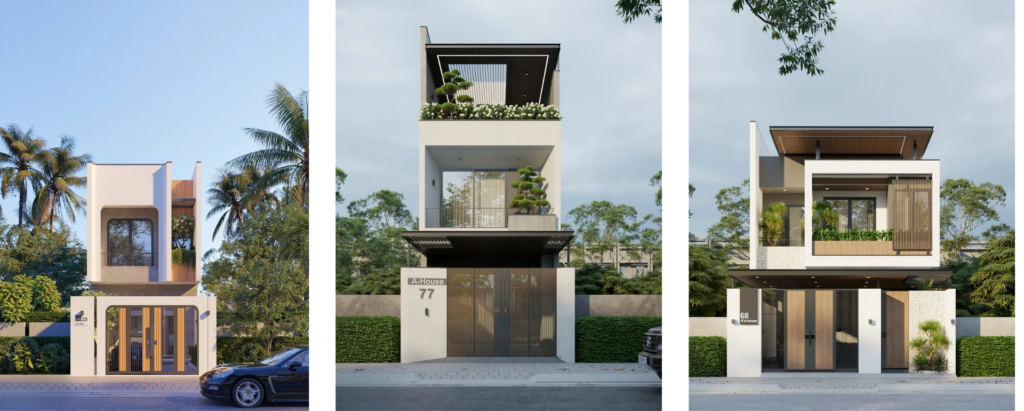
Instead of the perfect balance found in classical architecture, modern design plays with boxy volumes and asymmetrical solid–void compositions. These artistic offsets and layered structures make the house resemble a massive sculpture—dynamic, bold, and full of personality.

The Rise of Glass and Wood-Composite Materials
The combination of large tempered glass panels and decorative wooden slats has become an essential hallmark.
- Glass: Expands the view and blurs the boundary between interior and exterior spaces.
- Wood / Wood-like materials: Add warmth, balancing the coldness of concrete and metal.
Lighting – The Soul of Nighttime Architecture
Recessed LED strips and façade uplighting are carefully calculated and strategically placed. At night, lighting does more than illuminate—it “redraws” the building’s form, turning the house into a radiant focal point within the urban landscape.

High-Level Green Solutions (Sky Garden)
Most modern designs make use of rooftops or stepped balconies to incorporate greenery into living spaces. This serves as an effective “dust-filtering and heat-reducing” solution, while also bringing a resort-like atmosphere right into the home.

3. Why is modern design an inevitable trend in 2026?
- Function optimization: Perfectly suited to tech-driven lifestyles and the smart living needs of young families.
- Flexible costs: Materials can be easily adjusted to fit different budgets while still maintaining a high level of aesthetics.
- Maximum openness: Open-plan designs enhance natural ventilation and daylight, significantly reducing energy consumption.

4. Tips for Building a Modern Townhouse
- Focus on connectivity: Ask your architect to design seamless transitions between the living room, kitchen, and garden.
- Invest in aluminum–glass systems: Opt for high-quality aluminum (such as powder-coated or anodized finishes) to ensure durability against weather conditions and enhance aesthetics.
- Keep it minimal, not monotonous: Choose a single focal point for the façade (e.g., a natural stone-clad wall or a rotating wooden slat system) to create a distinct personal touch.

Conclusion
Modern architecture is a symbol of freedom and the aspiration for the future. If you appreciate simplicity with sophistication, strength with emotion, these modern designs are the perfect starting point for your dream home.