


Japandi Style: The Perfect Fusion of Japanese Minimalism and Scandinavian Design
In the architectural trends of 2026, Japandi has emerged as a top choice for those seeking a peaceful yet fully functional living space. The blend of Wabi-Sabi philosophy (Japan) and Scandinavian style creates a “just enough” design language—warm, refined, and exceptionally elegant.
1. What is Japandi style?
Japandi is a combination of “Japanese” and “Scandinavian.” While Japanese design brings elegance, raw simplicity, and tranquility, Scandinavian style adds modernity, sophistication, and lighter color palettes. The result is a balanced living space focused on comfort and emotional well-being.

Thiết kế Japandi – Nguồn: Pinterest
2. Key Characteristics of Japandi Architecture
Neutral and Warm Color Palette
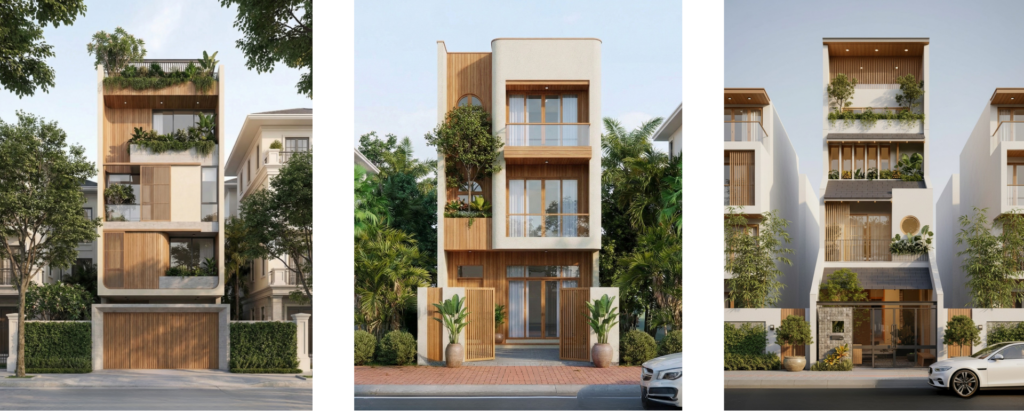
Unlike the cool tones of Modernism, Japandi embraces soft, muted hues such as cream white, beige, light wood tones, and soft gray. These colors create a sense of openness and fill the space with calm, positive energy.
A Blend of Modern Geometry and Soft Arches
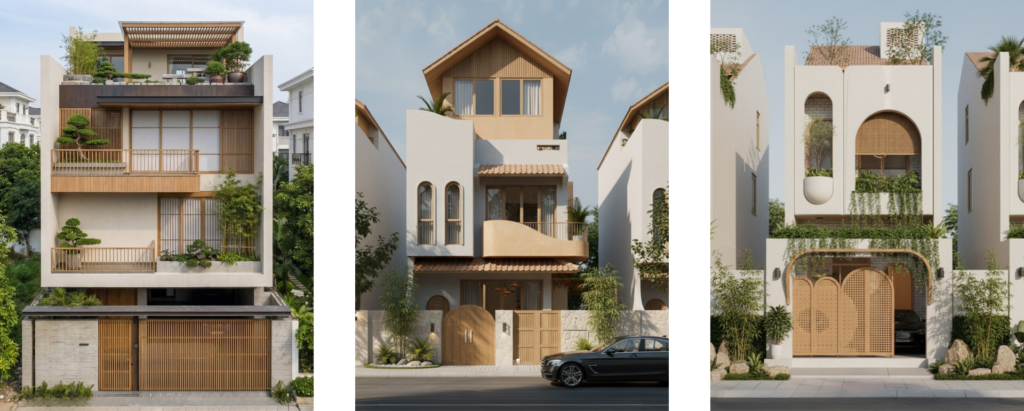
Japandi architecture in 2026 is no longer confined to rigid, boxy forms. The introduction of large arched openings and gently curved wall edges softens the harshness of concrete, creating a more graceful and inviting aesthetic.

Wood Materials and a Nature-First Approach
Wood is the soul of Japandi design. Vertical wooden slats running across the façade not only provide sun shading but also create a visual effect that enhances the building’s height.
Complementing this are thoughtfully integrated green elements on balconies, forming a true “eco-living” ecosystem.

Natural Light and Airy Spaces
Japandi designs prioritize large glass openings and void spaces to fully capture natural sunlight. As light passes through wooden slats, it creates artistic shadow patterns, bringing dynamic changes to the living space throughout the day.

3. Why is Japandi a “design trend fever” in 2026?
Healing the soul: Amid the noise of urban life, a Japandi home feels like a peaceful retreat, helping homeowners effectively recharge and restore energy.
Optimized for compact spaces: With its minimalist approach, this style is ideal for narrow townhouses in Vietnam, making interiors feel more spacious and airy than they actually are.
Sustainable beauty: The combination of natural materials and modern lines ensures the home remains visually appealing and timeless even after decades of use.

4. Tips for Decorating a Japandi-Style Home
Choose low-profile furniture: This is a signature element of Japanese culture, helping the space feel more open and visually taller.
Keep décor minimal and intentional: Instead of cluttering the space, select a few handcrafted items or uniquely shaped ceramics as subtle focal points.
Use slender greenery: Plants such as bamboo, fiddle-leaf fig, or other small-leaf varieties are ideal, aligning perfectly with the refined and delicate spirit of Japandi design.
Conclusion
Japandi architecture is not just a design style—it is a way of life. If you appreciate simplicity without monotony, modernity with warmth and connection, then Japandi is the perfect piece to complete your home in 2026.